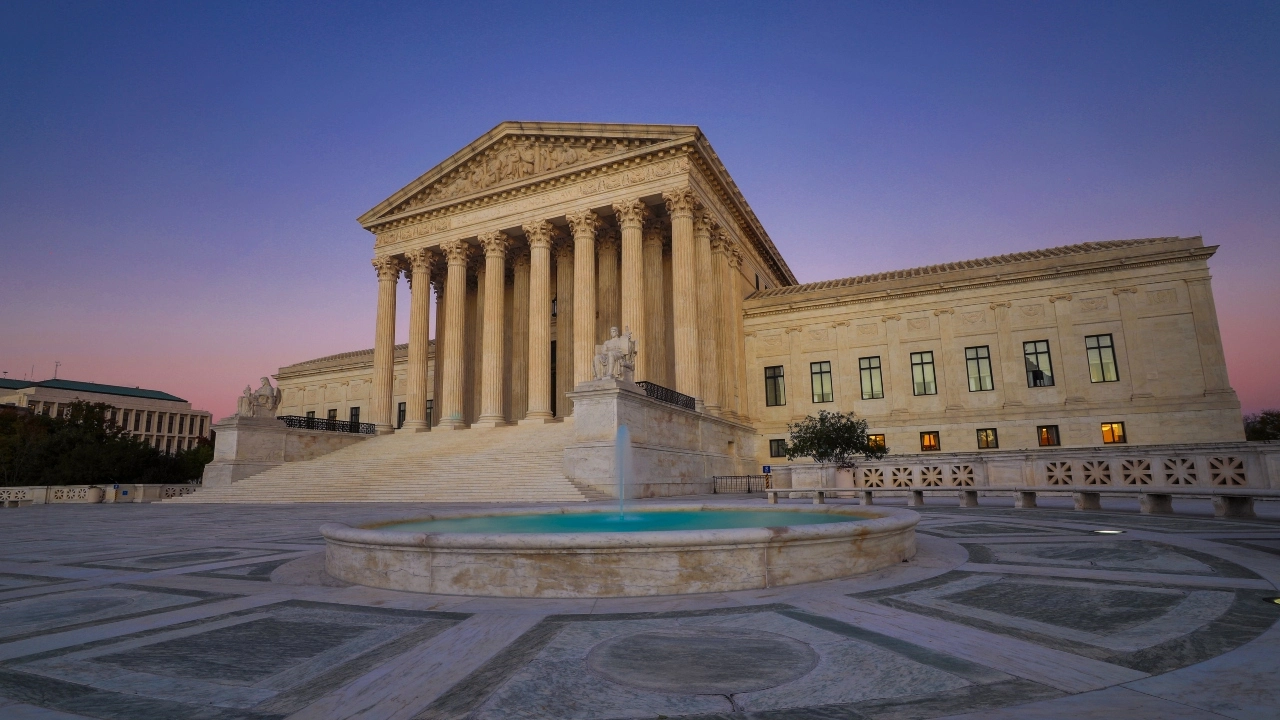
The U.S. Supreme Court on Monday declined to hear a challenge to federal marijuana laws brought by four licensed cannabis companies, including a major marijuana multistate operator.
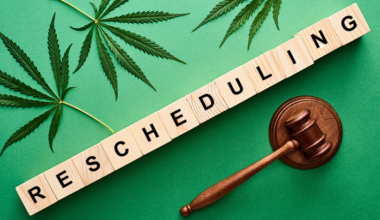
The highest court’s rejection of Canna Provisions et al v. Bondi refocuses attention on the White House and President Donald Trump’s interest in marijuana rescheduling as the $32 billion legal industry’s next great hope for major reform.
Josh Schiller, a partner at law firm Boies Schiller and one of the attorneys representing the plaintiffs, did not immediately respond to a request for comment.
A spokesman for Verano Holding Corp., one of the four licensed cannabis companies that initially sued the Justice Department in October 2023, did not immediately respond to a request for comment.
Marijuana industry’s Supreme Court gambit fails
In addition to Verano, the litigants were Canna Provisions, a Massachusetts cannabis retailer; Gyasi Sellers, CEO of the Treevit delivery service; and Wiseacre Farm, a cultivator.
Supreme Court justices met behind closed doors on Dec. 12 to consider the cannabis companies’ petition, brought after a lower federal court in Massachusetts and an appellate court rejected their constitutional challenge to federal marijuana laws.
The companies hoped to bring cannabis laws before the high court for the first time since 2005.
They argued conditions have changed so much since then, with more than two dozen states have legal adult-use marijuana, that the factual basis for the ruling in Gonzales vs. Raich no longer applies.
Their appeal also referenced comments in a separate case in 2021 from Supreme Court Justice Clarence Thomas, who suggested federal marijuana law might not be “necessary or proper.”
In their appeal, the companies argued that:
- The U.S. Constitution affords them a “right to cultivate and transact in marijuana” that is “deeply rooted in this nation’s history and its legal traditions.”
- The Controlled Substances Act violates the Fifth Amendment’s right to due process.
Trump White House now the best hope for cannabis reform
Schiller, one of the attorneys, previously told MJBizDaily that the case was an attempt to “shake the box a little bit” after federal marijuana reform efforts stalled out in Congress and elsewhere.
Notably, the companies filed their initial lawsuit a few months after the Biden-era marijuana rescheduling process yielded the transformative declaration from health regulators that cannabis has a “currently accepted medical use” in the United States.
That led to a Justice Department proposal to downgrade cannabis to a Schedule 3 drug – a proposal that eventually stalled out on the eve of Trump’s inauguration.
But now, the White House is reportedly considering ordering federal agencies to reschedule marijuana and to order certain CBD treatments be covered by Medicare.
Subscribe to the MJBiz Factbook
Exclusive industry data and analysis to help you make informed business decisions and avoid costly missteps. All the facts, none of the hype.
What you will get:
- Monthly and quarterly updates, with new data & insights
- Financial forecasts + capital investment trends
- State-by-state guide to regulations, taxes & market opportunities
- Annual survey of cannabis businesses
- Consumer insights
- And more!
That announcement, supposedly coming via executive order, failed to materialize on Monday.
Several people with knowledge of an Oval Office discussion that involved cannabis industry figures, the president, top lawmakers and Cabinet officials said an announcement could be coming as soon as Wednesday.
Chris Roberts can be reached at chris.roberts@mjbizdaily.com.
Medical Disclaimer:
The information provided in these blog posts is intended for general informational and educational purposes only. It is not a substitute for professional medical advice, diagnosis, or treatment. Always seek the advice of your physician or other qualified healthcare provider with any questions you may have regarding a medical condition. The use of any information provided in these blog posts is solely at your own risk. The authors and the website do not recommend or endorse any specific products, treatments, or procedures mentioned. Reliance on any information in these blog posts is solely at your own discretion.