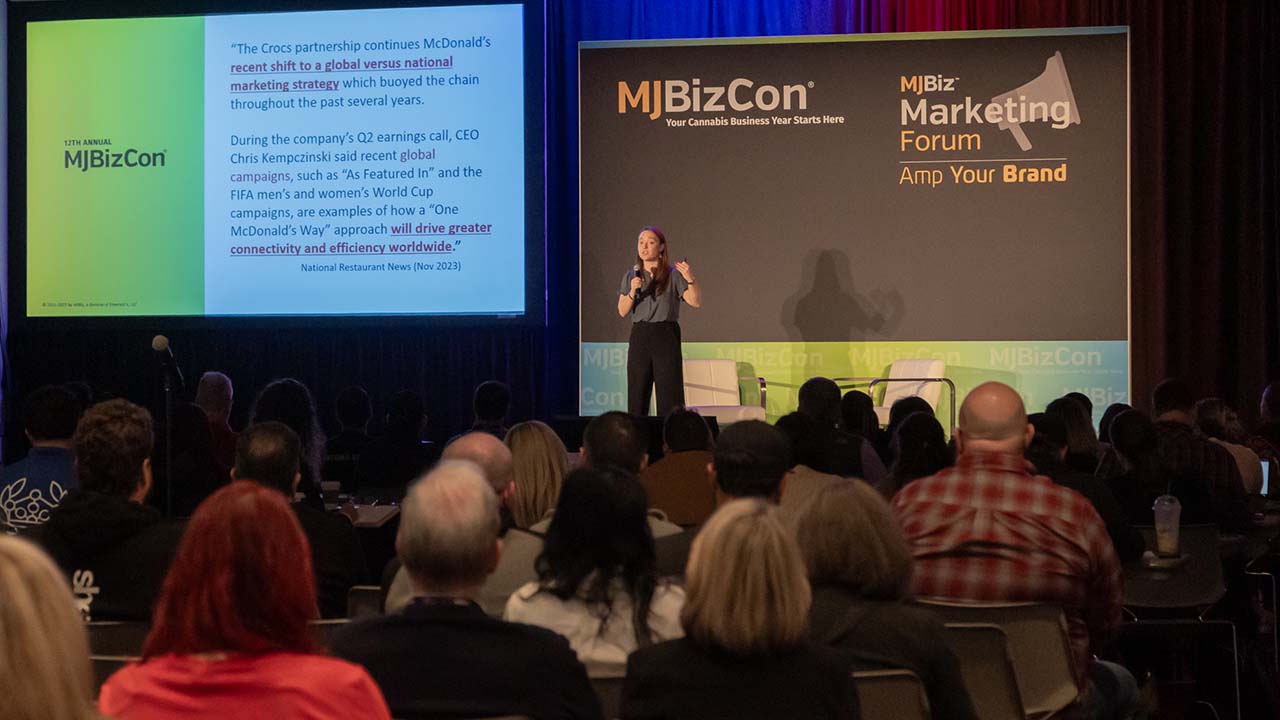
For many operators, investors and ancillary businesses in the cannabis industry, major changes have been just around the corner for years.
The difference for attendees at MJBizCon 2025 was that a significant, potentially game-changing shift just happened – and with President Donald Trump still weighing marijuana rescheduling after signing a ban on hemp THC into law, more appear on the way.
But as MJBizCon attendees heard in Las Vegas, there are still fundamental rules that successful operators will follow that are reform-proof.
Here are five major takeaways our editorial team heard on the ground that will portend success in 2026 and beyond.
More major federal cannabis policy reform is coming
Partisan politics – and a significant dip in support for cannabis legalization among Republicans aside – operators still view the Trump administration as the most cannabis friendly in history.
As proof, they point to the president’s endorsement of adult-use legalization in Florida last year and his actions since – including posting a video about the benefits of CBD to Truth Social and his summertime pledge to consider downgrading cannabis’ status under federal law.
This is a major step forward from just a few years ago, noted George Archos, CEO of marijuana multistate operator Verano Holding Corp, during a panel discussion on Wednesday.
As befits a president keen to deliver on promises – and, perhaps, even keener to push populist measures and maintain Republican control of Congress – the belief in cannabis industry c-suites is that marijuana rescheduling will come sometime before the 2026 midterm elections.
But successful operators will not wait for White House intervention
However, savvy operators know too well the risk of basing a business plan on outside intervention.
A successful cannabis outfit will be one prepared to work in the current reality – with a plan to quickly pivot when and if conditions change, said Riana Durrett, the director of the Cannabis Policy Institute at the University of Nevada, Las Vegas who spoke on a Thursday panel.
“I might be too skeptical, but I have fallen for convincing predictions that we are on the brink of a major change too many times,” she said.
“I think all operators need to anticipate that the current landscape could remain largely unchanged for years to come or could rapidly change.”
“They need to be prepared for both, and they need to know that models could vastly change and the ones prepared to change will be the most successful.”
The importance of knowing who’s buying cannabis – and why
Retailers make a significant mistake if they treat all their customers the same.
“It is a mistake to paint anyone who buys cannabis with the same brush,” said Kris Walker, president and chief commercial officer of Chicago-based cannabis industry data provider Hoodie Analytics.
The modern cannabis consumer is diverse, with preferences varying widely across demographics and regions. A one-size-fits-all approach to assortment and discounting often misses the mark.
Pre-rolls, for instance, are the fastest-growing category – no longer because they’re cheap but because they offer and easy, ready-to-use format. This trend is especially pronounced among older consumers, who prioritize convenience alongside pain relief and wellness benefits.
In contrast, Gen Z is the most price-conscious demographic. While their needs are varied – balancing wellness with enjoyment – price remains their No. 1 consideration. This group is also a key growth driver, with new consumers turning 21 every day.
“Gen Z, in particular, is the one demographic that’s growing in terms of share of sales,” said Cy Scott, co-founder and CEO of Seattle-based data analytics company Headset.
Marijuana marketing and advertising are difficult but vital
With outmoded state and federal laws restricting traditional advertising channels as well as creating major pitfalls on social media, cannabis marketers must find creative pathways to achieve high visibility and strong returns.
The key is the ability to adapt and use resources strategically. That might mean dedicating 80% of a robust marketing budget to efforts like online ads and iHeartJane geotargeting, said Tiana Woodruff, founder and CEO of Los Angeles-based wellness brand Queen Mary.
Annie Starr Davis, founder and CEO of Sonoma County cannabis strategy consulting firm Growing Impact, echoed the need for creativity – not just in the message but in finding the right platform to spread it.
She suggested launching targeted Spotify campaigns and leveraging platforms like Leafly for content marketing to measure campaign attribution effectively.
Many operators must also do their own consumer research.
“So much of marketing is understanding how a consumer thinks outside your marketing,” Davis said. “The objective is to build first-party data … and measure those touchpoints.”
Subscribe to the MJBiz Factbook
Exclusive industry data and analysis to help you make informed business decisions and avoid costly missteps. All the facts, none of the hype.
What you will get:
- Monthly and quarterly updates, with new data & insights
- Financial forecasts + capital investment trends
- State-by-state guide to regulations, taxes & market opportunities
- Annual survey of cannabis businesses
- Consumer insights
- And more!
Flower power at the heart of cannabis industry success
The industry could yet be disrupted by new products such as highly specialized, near-pharmaceutical grade formulations with precise cannabinoid ratios, tailored to treat specific conditions. But until then, despite all the interest from mainstream retail in low-dose THC beverages, cannabis flower is still the most popular product among users and still rules the retail counter.
Cannabis flowers’ stubborn staying power reemphasizes the importance of the cultivation room, where many operators – vertically integrated or otherwise – may find the origin of their success. But the responsibility to know what’s going on under the lights extends up and down the supply chain.
“Know your people, who you are and your genetics,” said Eden Williams, the general manager of Vertical People Dispensary in Cairo, Illinois.
That means knowing what strains are a hit with your audience – and knowing where to source the seeds or clones as well as being sure that the cultivation operation is sound. As many a struggling operation can tell you, going from a few dozen lights to a hundred or more requires major adjustments across the board.
“Make sure your grower knows how to grow in your environment,” Williams added.
Darcel Duncan, Margaret Jackson, and Chris Roberts contributed to this report.
Medical Disclaimer:
The information provided in these blog posts is intended for general informational and educational purposes only. It is not a substitute for professional medical advice, diagnosis, or treatment. Always seek the advice of your physician or other qualified healthcare provider with any questions you may have regarding a medical condition. The use of any information provided in these blog posts is solely at your own risk. The authors and the website do not recommend or endorse any specific products, treatments, or procedures mentioned. Reliance on any information in these blog posts is solely at your own discretion.