
Recently, I made the mistake of allowing my friends to teach me how to ski. My first ski trip ended with a violent crash, leaving me with a broken leg, permanent nerve damage, and a deep laceration in the middle of my shin. I arrived at the doctor’s in an intolerable amount of pain, more than I had ever felt before. The doctor offered to write a prescription for opioids to manage the pain, which I declined in favor of cannabis products.
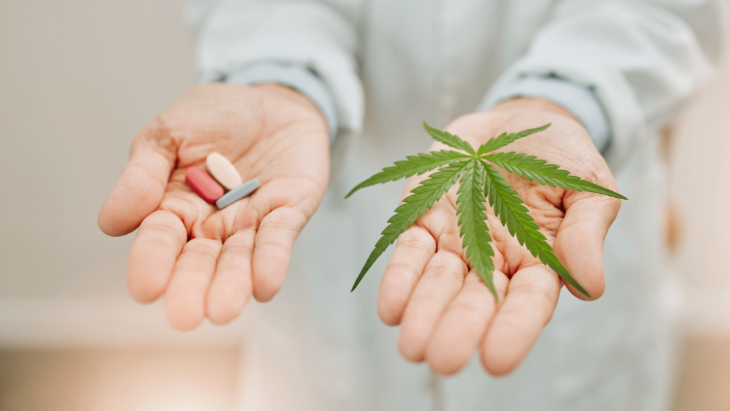
At first, my friends and family were confused that I denied the painkillers. I did so because I hate the side effects of opioids, including the feeling of being altered, drowsy, and confused. Furthermore, the highly addictive nature of opioids concerns me, so I ultimately decided against the prescription. In other words, reducing pain via cannabis felt like a safer and more comfortable choice for me.
And cannabis worked. Between the use of topical ointments and other cannabis products, I was able to drastically reduce my pain. I am not alone in this experience. Recently, more medical studies have demonstrated the pain-relieving effects of cannabis. For example, a just-published study of fibromyalgia patients demonstrated that cannabis treatment resulted in 70 percent of the treatment group achieving “clinically meaningful pain relief – defined as a ≥ 30 percent reduction in [patients’] average daily pain scores.”
My choice to consume cannabis for pain instead of opioids may not be the choice for everyone, but access should be there for those who want it. As more patients view cannabis as a legitimate treatment option, the decision I made is becoming more and more common. Many patients now often opt for cannabis over prescription medications to manage pain and reduce their reliance on prescription medications, which can be highly addictive. In the midst of a national opioid crisis, the presentation of cannabis products as legitimate substitutes to treat pain relief has become all the more important.
Research has shown that in states with some form of marijuana legalization, including both medical and recreational, the number of non-fatal opioid overdoses has decreased. More generally, cannabis access has been shown to be associated with reduced opioid abuse, hospitalizations, and overdoses (both fatal and nonfatal). This could be due to patients increasingly substituting cannabis for prescribed opioids.
This is not to say that cannabis has no side effects and is a perfect cure-all for every ailment. It isn’t. But my own personal experience, as well as the experiences of many others, show that it can be a preferable alternative to prescription opioid use. This is why the recent federal reclassification of state-approved medical cannabis is so vital: people deserve the right to medicate with cannabis if they see it as a preferable option over other prescription drugs.
Related
Medical Disclaimer:
The information provided in these blog posts is intended for general informational and educational purposes only. It is not a substitute for professional medical advice, diagnosis, or treatment. Always seek the advice of your physician or other qualified healthcare provider with any questions you may have regarding a medical condition. The use of any information provided in these blog posts is solely at your own risk. The authors and the website do not recommend or endorse any specific products, treatments, or procedures mentioned. Reliance on any information in these blog posts is solely at your own discretion.