Commercially licensed drivers and other transportation employees will continue to face sanctions for their use of state-authorized medical cannabis products, according to recently issued guidance from the US Department of Transportation.
The memo, dated May 26, affirms that there has been no change in drug testing-related policy despite the Justice Department’s decision to reclassify state-approved medical cannabis from Schedule I to Schedule III of the Controlled Substances Act.
“Marijuana use under state marijuana programs or other non-prescription sources does not qualify as a ‘legitimate medical explanation’ under 49 CFR § 40.137(a),” the memo reads. “A ‘legitimate medical explanation’ requires use of a legally prescribed controlled substance in compliance with federal laws governing such a prescription. … Even after rescheduling, state-dispensed marijuana does not constitute an FDA-approved drug.”
It concludes, “Although the MRO [medical review officer] may be presented with documentation such as State-issued medical marijuana cards, physician recommendations or certifications, or dispensary records or receipts, these documents do not satisfy part 40 requirements for a ‘legitimate medical explanation.’”
Testifying before Congress in 2024, the former Transportation Secretary made clear that rescheduling would not significantly change federal drug testing regulations, stating that the 1988 drug testing regulations explicitly mandate certain employers to screen for cannabis regardless of its placement in the CSA. “The rescheduling of marijuana from Schedule I to Schedule III … would not alter DOT’s [the US Department of Transportation’s] marijuana testing requirements with respect to the regulated community,” he said.
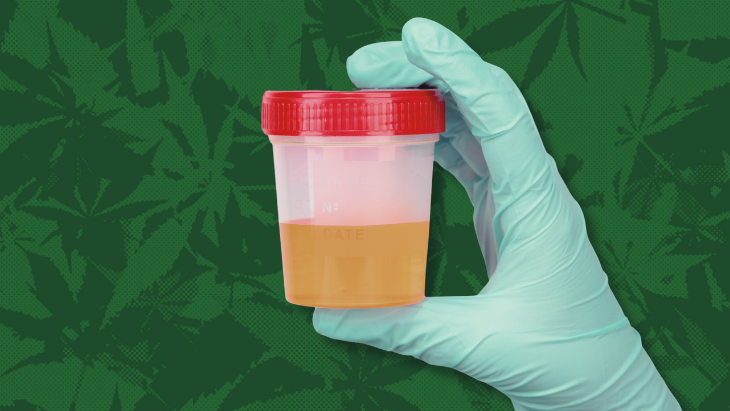
The federal drug testing mandate applies to nearly six million private-sector safety-sensitive transportation workers. It requires that commercially licensed drivers be subject to both pre-employment and random marijuana urinalysis testing, which screens for the presence of the inert carboxy-THC metabolite. This non-psychoactive metabolite is detectable in subjects’ urine for weeks or even months following past exposure. By contrast, marijuana’s acute effects typically dissipate within hours. Data published earlier this year in the journal Drug and Alcohol Dependence Reports found no differences in next-day cognitive performance among cannabis consumers and abstainers.
In recent years, over 139,000 truckers have tested positive for past cannabis exposure. That total far surpasses the total number of failures for all other substances combined. Most of these drivers have refused to reapply for work in the industry, which has led to supply chain issues.
“Suspicionless marijuana testing in the workplace is not now, nor has it ever been, an evidence-based policy,” NORML’s Deputy Director Paul Armentano wrote in an op-ed in The Hill. “Rather, this discriminatory practice is a holdover from the zeitgeist of the 1980s ‘war on drugs.’ But times have changed; attitudes have changed, and in most places, marijuana laws have changed. It is time for workplace policies, and for federal workplace drug testing policies in particular, to adapt to this new reality and to cease punishing employees for activities they engage in during their off-hours that pose no legitimate workplace safety threat.”
According to survey data compiled by the American Transportation Research Institute, 62 percent of representatives from motor carrier companies say that “changes were needed to federal drug policy rules in light of state-level legalization.”
Although DOT officials finalized a new rule in 2023 authorizing commercially licensed drivers the option to undergo oral fluid testing as an alternative to urinalysis, that policy change has not yet been implemented.
NORML has repeatedly argued that employers should not presume that the detection of either THC or its metabolites is evidence of impairment. Alternatively, NORML has called for the expanded use of performance-based tests, like DRUID or Predictive Safety’s AlertMeter.
The Transportation Administration’s guidance memo is available online. Additional information is available from the NORML Fact Sheet, ‘Marijuana and Cognitive Performance.’
Related
Medical Disclaimer:
The information provided in these blog posts is intended for general informational and educational purposes only. It is not a substitute for professional medical advice, diagnosis, or treatment. Always seek the advice of your physician or other qualified healthcare provider with any questions you may have regarding a medical condition. The use of any information provided in these blog posts is solely at your own risk. The authors and the website do not recommend or endorse any specific products, treatments, or procedures mentioned. Reliance on any information in these blog posts is solely at your own discretion.