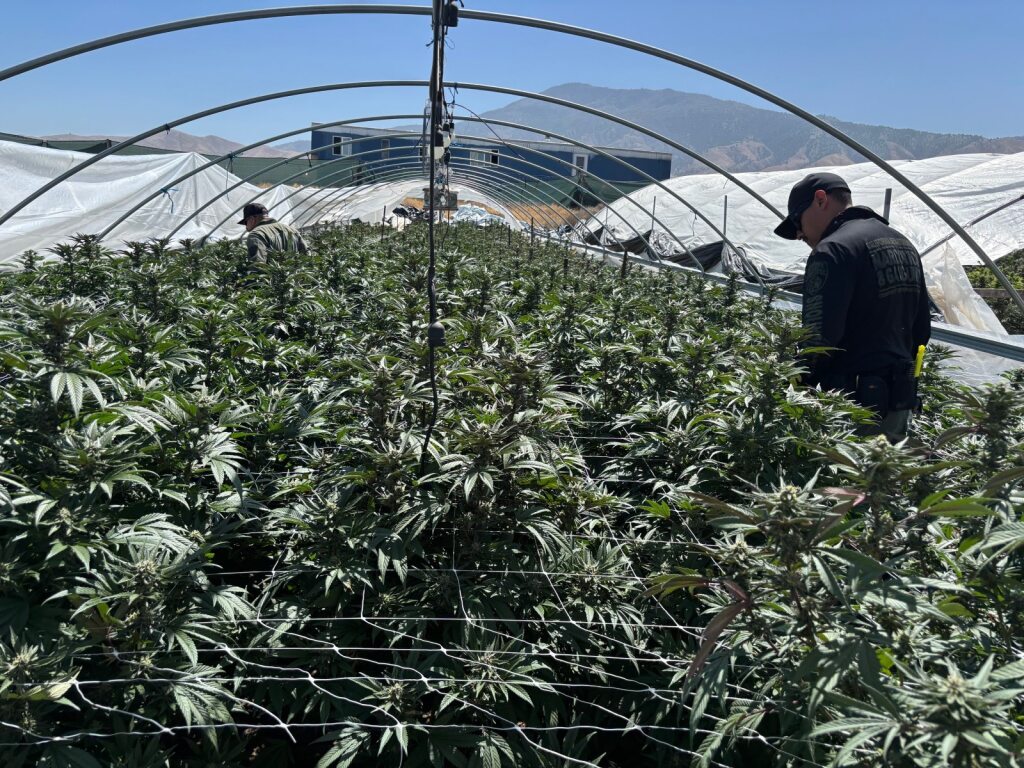
California law enforcement reported seizing and destroying a record 377,010 pounds of illicit cannabis worth $609 million in 2025, Gov. Gavin Newsom’s office said Tuesday.
But with illegal cultivation outpacing the regulated market by nearly a factor of 10, more drastic action than further tax cuts might be needed to rescue beleaguered small cannabis farmers.
The country’s most populous state, California is still home to the U.S.’s largest single cannabis market despite constant complaints from operators about shrinking margins – and, last year, a shrinking market – amid illicit-market competition.
Legal sales dipped to a five-year low last year, a decrease blamed mostly on a short-lived tax hike that’s since been repealed.

However, it remains to be seen whether that will be enough to stabilize California’s legal industry.
Can illicit cannabis seizures rescue California’s legal marijuana?
Illicit cannabis seizures have increased 18-fold from 21,230 pounds in 2022, when Newsom launched the Unified Cannabis Enforcement Task Force, a multiagency effort that includes game wardens, tax inspectors and labor regulators as well as police.
In addition to the seizures, California officials reported:
- Eradicating 590,000 plants
- Arresting 23 people
- Seizing $1.6 million in cash
Raids hit sales and distribution points as well as cultivation sites, according to a release from Newsom’s office.
In a statement, Newsom called the seizures “a success” that’s helping to “safeguard the legal cannabis industry from those who think the law doesn’t apply to them.”
Instead of the famed Emerald Triangle, almost half the cannabis seized – 169,000 pounds – was confiscated in two counties: Los Angeles and Alameda in Northern California.
Most cannabis unlawfully grown in California is shipped out of state, according to a state-commissioned report released last year.
California state and local officials have cut cannabis taxes
Heavy taxes are blamed for thwarting commercial cannabis cultivation in places like Humboldt County, where county supervisors this week finalized the repeal of a local cultivation tax.
Measure S had hampered legal growers, 75% of whom owed outstanding debt as of last year.
A tax increase that took effect July 1 also depressed retail sales before its October repeal.
Medical Disclaimer:
The information provided in these blog posts is intended for general informational and educational purposes only. It is not a substitute for professional medical advice, diagnosis, or treatment. Always seek the advice of your physician or other qualified healthcare provider with any questions you may have regarding a medical condition. The use of any information provided in these blog posts is solely at your own risk. The authors and the website do not recommend or endorse any specific products, treatments, or procedures mentioned. Reliance on any information in these blog posts is solely at your own discretion.