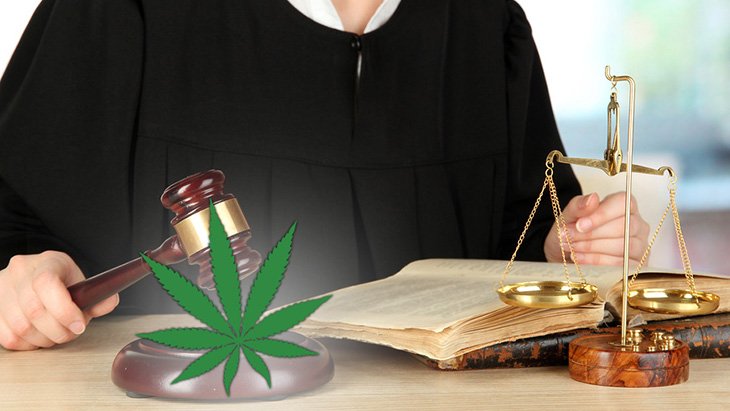

Judges cannot categorically prohibit marijuana use as a condition of probation, according to a judgment by the Michigan Supreme Court.
In a unanimous ruling, the Court the rejected arguments that marijuana use is a per se probation violation because the substance remains federally illegal. “The CSA does not preempt the MRTMA [Michigan Regulation and Taxation of Marihuana Act,]” it determined, “[which] provides Michiganders with state-law immunity from arrest, prosecution, or penalty in any manner for MRTMA-compliant acts.”
The Court further opined that a separate state law (The Probation Act) prohibiting probationers from violating federal statutes is also inapplicable in this case. Specifically, the Court ruled, “The MRTMA provides that all state laws ‘inconsistent with this act do not apply to conduct that is permitted by this act.’ … Among the MRTMA’s intentions was a desire ‘to prevent arrest and penalty for personal possession and cultivation of marihuana by adults 21 years of age or older.’ … The probation act’s absolute bar on MRTMA-compliant marijuana use is inconsistent with the MRTMA’s stated intent as well as its express dictates. … And in light of the MRTA’s provision on conflicts of law, where the MRTMA and the probation act conflict, the MRTMA controls.”
Therefore, it concluded, “Courts may not impose probation conditions barring MRTA-compliant marijuana use solely because it violates the CSA.”
Commenting on the decision, NORML’s Board Chair and legal counsel Joseph A. Bondy said: “The Michigan Supreme Court correctly recognized that a state’s legalization law cannot be nullified by reflexive reliance on federal prohibition. Voter-approved rights deserve meaningful judicial protection, and this decision reinforces that courts must respect them absent a genuine, individualized justification.”
Michigan voters in 2018 overwhelmingly passed a citizens’ initiative legalizing cannabis use by adults.
The case is People v. Hess.
Related
Medical Disclaimer:
The information provided in these blog posts is intended for general informational and educational purposes only. It is not a substitute for professional medical advice, diagnosis, or treatment. Always seek the advice of your physician or other qualified healthcare provider with any questions you may have regarding a medical condition. The use of any information provided in these blog posts is solely at your own risk. The authors and the website do not recommend or endorse any specific products, treatments, or procedures mentioned. Reliance on any information in these blog posts is solely at your own discretion.