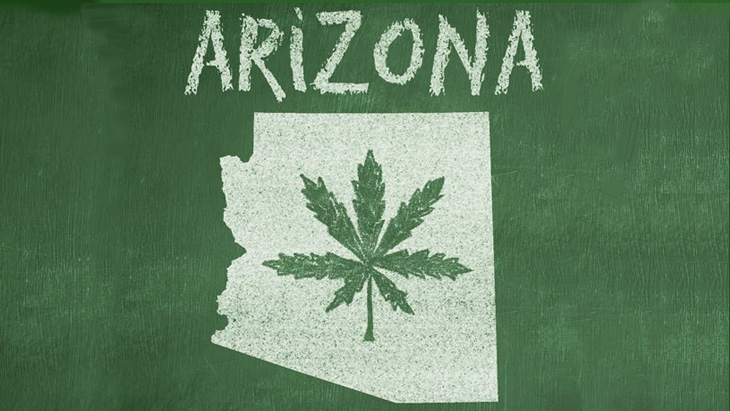
The lead proponent of an initiative campaign seeking to repeal key aspects of the state’s voter-approved marijuana legalization law has called off the effort.
In an interview with the Arizona’s Capitol Media Services group, the campaign’s chief advocate announced that he’s changed his mind on the legalization issue.
“I’ve adjusted my viewpoints,” said Sean Noble, President of the conservative-oriented group American Encore.
Noble said that he initially launched the initiative campaign because of fears that the state’s adult-use legalization law posed dangers to young people. He now says that he had no first-hand knowledge to support those beliefs and that he “was kind of relying on things that I had seen or read from other people.” He now rejects claims that state-legal retailers in Arizona are marketing cannabis products to underage patrons.
“They have not done some of the things that I thought they were doing,” he said. “I don’t think that they’re specifically marketing gummies and candies and that kind of thing the way that I was led to believe that they were doing. Maybe they’re doing that in other states. But it’s not happening here in Arizona.”
Compliance check data from legal states consistently finds that licensed cannabis retailers are more likely than alcohol proprietors to deny those without proper ID entry to their facilities.
In response to Noble’s comments, NORML’s Deputy Director Paul Armentano said: “Regulation works. Illicit marijuana providers don’t ask for or check for ID, but licensed businesses most certainly do. States’ real-world experience with adult-use marijuana legalization affirms that it is being implemented in a way that provides regulated access for adults while simultaneously limiting youth access and misuse. That is among the many reasons why voters prefer these policies over a return to criminal prohibition and why there exists little to no appetite among the public to reverse these voter-approved adult-use legalization laws.”
Noble’s group had campaigned unsuccessfully against the 2020 initiative (Proposition 207), which was approved by 60 percent of voters.
Prohibitionist groups announced earlier this year that they were launching repeal efforts in three states: Arizona, Maine, and Massachusetts. In February, proponents of the Maine campaigned announced that they had failed to gather sufficient signatures to qualify their repeal initiative for this years’ ballot. While the Massachusetts effort has qualified for the November ballot – thanks in large part to an infusion of more than $1.5 million in out-of-state dark money – the state Supreme Court is now considering arguments that it violates single subject rule requirements.
Recent statewide polling finds that 63 percent of Massachusetts’ voters, including strong majorities of Democrats (74 percent) and Independents (69 percent), oppose the ballot question. Just 20 percent of respondents expressed support for the measure.
Additional information on 2026 ballot efforts is available from NORML’s Election Central.
Related
Medical Disclaimer:
The information provided in these blog posts is intended for general informational and educational purposes only. It is not a substitute for professional medical advice, diagnosis, or treatment. Always seek the advice of your physician or other qualified healthcare provider with any questions you may have regarding a medical condition. The use of any information provided in these blog posts is solely at your own risk. The authors and the website do not recommend or endorse any specific products, treatments, or procedures mentioned. Reliance on any information in these blog posts is solely at your own discretion.