
I’m Tobey MacCachran – a senior journalism and English student at Denison University– and an intern with NORML since December. I came to cannabis advocacy the way most people arrive at anything that matters: it stopped being abstract.
I’ve had a birthmark on my right wrist my whole life. Other kids would notice it, point at it, and make jokes, but I never minded. It was a part of me that was as ordinary as my hands or my name. I was born with it, and I was comfortable.
Eczema was different.
It showed up in my early teens, uninvited and impossible to ignore. Red, cracking patches spread across my skin during dry winters, causing my hands, wrists, and neck to resemble the surface of Mars. The birthmark was mine. The eczema felt like an invasion. And somewhere in the space between those two things, my relationship with my own body quietly changed.
By high school, my life was dictated by small adjustments. Long sleeves on some days. Certain seats. Situations I’d remove myself from before anyone noticed. Shirt always on at the beach. And then at 17, I tried a cannabis topical for the first time.
Something actually worked. And last Friday, Ohio made it a crime to access the product that helped me most.
SB56 was sold as consumer protection. For people who depend on cannabis topicals for chronic pain and skin conditions, it landed like a punishment.
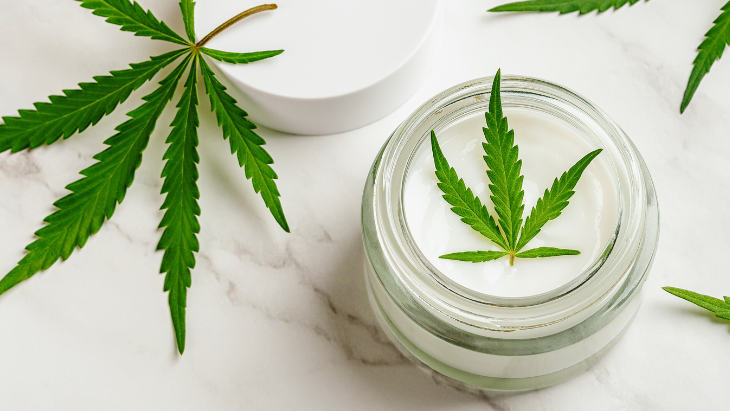
A cannabis topical isn’t recreational. It’s a cream or balm infused with cannabinoids applied directly to the skin. No high. No altered state. For millions of people managing chronic pain, inflammation, and skin conditions, it’s simply the thing that works when nothing else does. It was that for me – the first treatment in years that gave back some ordinary comfort in my own body. The kind of comfort I hadn’t realized I’d lost until I had it again.
Ohio Senate Bill 56 went into effect on March 20th. Governor DeWine signed it in December, framing it as consumer protection – a crackdown on unregulated intoxicating hemp products that flooded gas stations and corner stores. And there’s a real conversation to be had there. But buried inside the bill are provisions that go far beyond protecting anyone.
SB56 criminalizes bringing legally purchased cannabis products from other legal states back to Ohio. It funnels hemp-derived cannabinoid products – including topicals with any “meaningful” cannabinoid content – exclusively through licensed dispensaries, and bans outright those that don’t meet its tightly drawn definitions.
The practical effect for someone like me: the products I relied on, which I could previously access through wellness stores and hemp retailers, are now either gone from shelves or available only through the state’s licensed dispensary system. And accessing that system as a medical patient – which would give the broadest access – requires an annual physician visit that, through third-party certification services, typically costs over $100. As a college student without much financial cushion, and who only lives in Ohio temporarily, that’s not a door open to me.
So hypothetically, if I drove up to Michigan – where cannabis is legal, regulated, and where topical options are more widely available – and brought something back across the stateline, I would be committing a crime under Ohio law. Not because I wanted to get high. Because I wanted my skin to stop hurting.
This is the part that should concern every Ohioan, whether they are a cannabis consumer or not.
In November 2023, Ohio voters passed Issue 2 with 57% of the vote – a direct, democratic mandate to legalize adult-use cannabis. It was unambiguous. Ohioans across demographic and party lines said yes. The legislature’s response was to spend the next two years finding ways to avoid defining what ‘yes’ actually meant.
SB56 passed along party lines in the Ohio Senate. It wasn’t a compromise – it was a correction. And the people paying the price aren’t recreational users looking for cheaper options across state lines. They’re patients, people with chronic conditions, elderly Ohioans who found non-intoxicating relief for the first time and now can’t access it the way they once could. They voted yes on Issue 2. They followed the process. And now, they’re absorbing the consequences of a legislature that decided the outcome needed adjusting.
A referendum effort to repeal SB56 just fell short – organizers from Ohioans for Cannabis Choice needed roughly 248,000 signatures from at least 44 of Ohio’s 88 counties before a March 19th deadline, which would have paused the law and sent the question back to voters in November. They ran out of time. The law is now in effect. But that doesn’t mean the fight is over – it means the next phase starts now.
I know what it costs when policy ignores people like me. And I think the 57% of Ohioans who voted yes deserve a legislature that takes them seriously.
Contact your Ohio representative. Make your voice heard. Show up.
The legislature rewrote our vote quietly. The least we can do is be loud about it.
Related
Medical Disclaimer:
The information provided in these blog posts is intended for general informational and educational purposes only. It is not a substitute for professional medical advice, diagnosis, or treatment. Always seek the advice of your physician or other qualified healthcare provider with any questions you may have regarding a medical condition. The use of any information provided in these blog posts is solely at your own risk. The authors and the website do not recommend or endorse any specific products, treatments, or procedures mentioned. Reliance on any information in these blog posts is solely at your own discretion.