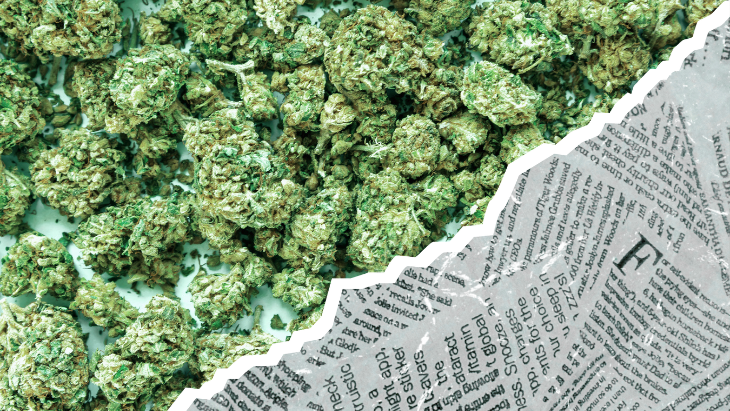

The New York Times has a pot problem.
In a recent commentary, the Times editors opine that states have rushed to legalize the substance “without adequately regulating it.”
However, state marijuana markets are already highly regulated and many of the options proposed by the Times editors are either redundant or would inadvertently strengthen the illicit marketplace.
For instance, the Times laments that adult-use cannabis products are not subject to sufficient taxation. But this is far from the truth. In fact, most states impose taxes on cannabis products that far surpass those imposed upon other goods, including alcohol. In some states, consumers face a tax burden of nearly 40 percent on cannabis products – that is, if they choose to pay it.
In many cases, excessive taxes steer consumers toward the unregulated market where they can purchase marijuana at far cheaper prices. Placing even higher taxes on legal cannabis goods will only amplify this trend — thereby undermining the primary goal of legalization, which is to provide adults with safe, affordable, above-ground access to lab-tested products of known purity, potency, and quality.
The Times editors also allege that so-called ‘Big Weed’ is pushing products designed to be appealing to children by mimicking trademarked brands. This allegation is also wrong.
That’s because the products highlighted by the Times are exclusive to the unregulated market. Typically, these products are ‘hemp-derived’ intoxicants that are sold at gas stations and smoke shops in jurisdictions where cannabis remains illegal. (In legal jurisdiction, there exists little consumer demand for these products.) They are not available at state-licensed marijuana dispensaries, nor are they manufactured by state-licensed producers because most state-regulated markets explicitly prohibit the sale of products that either resemble existing brands or that could be perceived as particularly desirable to young people.
The Times also warns that the legal industry is promoting uniquely potent products. This allegation is also specious. In fact, high-potency varieties of cannabis, like hashish, have always been available. When consumers encounter higher strength cannabis, they typically consume less of it. This regulatory process is known as self-titration. (Consumers of alcohol engage in similar behavior by drinking lesser quantities of high-potency liquor than lower-potency beer.)
Further, most state-legal markets already impose limits on certain products’ potency or on the total amount of THC permissible per single serving. This trend speaks to one of the primary advantages of legalization. It provides governments with the ability to oversee the market, establish regulations and best practices for those who participate in it, and sanction those who don’t play by the rules.
Finally, the Times cautions that a growing number of Americans acknowledge consuming cannabis products post-legalization. This is true. However, the Times neglects to highlight that this growth is exclusively among adult consumers. In fact, marijuana use by young people has fallen dramatically during the past decade – overlapping with the adoption of state-level cannabis regulations – and is now at historic lows. Specifically, federally funded survey data reports that marijuana use by teens fell 25 percent among 12th graders, 45 percent among 10th graders, and 38 percent among 8th graders since 2012.
Curiously, the Times fixates on the fact that among some consumers, cannabis use is surpassing the use of alcohol. This is neither surprising nor necessarily troublesome. As more Americans have become aware of the significant health consequences associated with alcohol, its consumption has fallen dramatically. Moreover, many scientific experts – and even the Times editors – acknowledge that marijuana “is safer than alcohol” and many consumers admit having switched substances for this very reason. That doesn’t seem like such a bad thing.
That said, there is one thing the Times editors do get right. Specifically, they wisely acknowledge that America shouldn’t return to the failed policy of “heavy-handed criminal prohibition.” This policy was – and in some jurisdictions – still is an unmitigated disaster that results annually in hundreds of thousands of needless criminal arrests and disrupted lives. In fact, it’s the overt failure of marijuana prohibition that ushered the modern push for cannabis legalization and regulation in the first place.
Today, nearly 70 percent of the public support legalizing marijuana. Twenty-four states and the District of Columbia have adopted legalization, and no jurisdiction has ever repealed or rolled back this policy. That’s because most Americans prefer regulation to criminal prohibition.
Has legalization’s rollout been perfect? Of course not. Are there trade-offs that must be considered? Certainly. Should governments continue to tweak the regulatory landscape as we learn more about marijuana markets and consumers’ behaviors? Yes, indeed. Cannabis re-legalization is a work in progress. But it’s here to stay and by and large, it’s a process we’re getting right.
A version of this commentary also appears in Marijuana Moment.
Related
Medical Disclaimer:
The information provided in these blog posts is intended for general informational and educational purposes only. It is not a substitute for professional medical advice, diagnosis, or treatment. Always seek the advice of your physician or other qualified healthcare provider with any questions you may have regarding a medical condition. The use of any information provided in these blog posts is solely at your own risk. The authors and the website do not recommend or endorse any specific products, treatments, or procedures mentioned. Reliance on any information in these blog posts is solely at your own discretion.