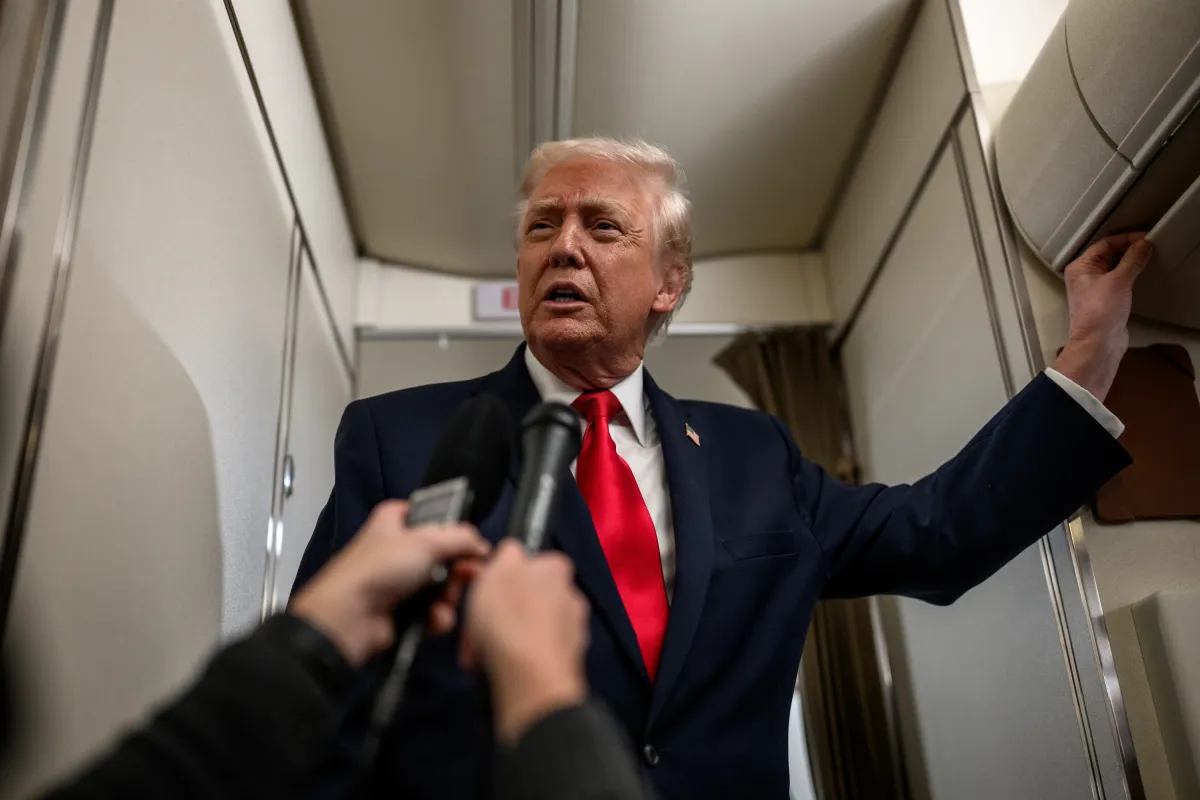
President Donald Trump is expected to order cannabis be reclassified as a less dangerous drug as soon as today.
What happens next – and exactly when the $32 billion legal marijuana industry could expect to reap the benefits – is less clear and may remain so even after the president issues an executive order, legal and political observers told MJBizDaily.
“It’s difficult to say precisely exactly what the rescheduling process will look like at this time,” said Tim Swain, a Boston-based partner at law firm Vicente LLP.
“There are several avenues the process could take,” he added, including “a return to last year’s hearings on the DEA’s proposed rulemaking or something similar.”
Whether marijuana rescheduling follows a Biden-era pattern or whether Trump takes “a different, perhaps more aggressive approach is unclear and will remain so at least until the executive order is issued,” Swain said.
However, the benefits for the $32 billion U.S. regulated marijuana industry are clear.
What does marijuana rescheduling do for plant touching businesses?
Reclassifying cannabis as a Schedule 3 drug, down from Schedule 1 of the Controlled Substances Act, promises tax relief for plant-touching marijuana businesses.
Internal Revenue Code Section 280E, which forbids most typical business expense deductions on federal returns, applies only to sellers of Schedule 1 and Schedule 2 drugs.
“For plant-touching operators, that’s immediate margin and cash-flow relief,” said Jason DeLand, founder and chairman of dosist, a California-based cannabis wellness brand. “It’s the difference between survival and investment in people, R&D, retail experience, safety testing, and brand.”
That said, there are clear limits. Warned DeLand: “Schedule 3 is not federal legalization.”
What marijuana rescheduling doesn’t do: banking, investment, and interstate commerce
More reform, such as Congress finally passing a banking bill or similar cannabis reform measures, is needed to usher in great leaps forward such as regulated interstate commerce and interest from risk-averse institutional finance and mainstream public exchanges.
“The core challenges around cannabis banking such as compliance burdens, cash dependency, and regulatory uncertainty would remain unchanged,” said Terry Mendez, the CEO of Safe Harbor Financial, a major cannabis industry financial services provider.
“The industry would still fall under the Bank Secrecy Act, with all its reporting and monitoring obligations intact,” he added. “This moment is likely to invite broader interest from financial institutions, but without structural reform or updated guidance, many will remain cautious.”
As a result, most major cannabis companies – even those that have already filed tax returns going back several years claiming immunity from 280E – are entering 2026 prepared to continue business as normal.
Marijuana rescheduling and research, plus hemp THC
Conventional wisdom holds that downgrading cannabis’ status under federal law will lift barriers to research and encourage public universities and other institutions leery of losing federal funding to study the drug.
That’s despite speculation that a poison pill tucked into a Biden-era research bill will stymie progress on cannabis’ medical efficacy in the United States.
Still, moving cannabis to Schedule 3 is official government acknowledgement that marijuana is medicine. Reclassification could encourage federal health officials to consider research conducted overseas, such as the studies into cannabis’ value in treating neuropathic pain conducted in the United Kingdom by Curaleaf Holdings.
Successful efforts to deschedule cannabis, as many activists demand, will take such a path.
Most observers consider other broader reform efforts more likely after marijuana rescheduling.
For example, hemp operators are hopeful that rescheduling would encourage Congress to reconsider the ban on hemp-derived THC products that Trump signed into law last month.
And regulating all THC products under federal law – potentially unifying the hemp and marijuana sectors into a $60 billion annual THC industry – is more likely once cannabis restrictions are relaxed.
“Reclassification increases the likelihood that Congress and the federal government will move toward a coherent framework that keeps hemp products legal but properly regulated,” said Joe Gerrity, the New Orleans-based CEO of Crescent Canna, a hemp THC company.
How does the marijuana rescheduling process work?
The president’s anticipated move follows a years-long charm campaign waged by cannabis businesses and their lobbyists.
It also follows an attempt to ease federal marijuana laws begun in Oct. 2022 by former President Joe Biden.
Under Biden, health regulators declared in Aug. 2023 that cannabis has a “currently accepted medical use” in the United States – a key finding for cannabis to fit into Schedule 3, a designation for drugs that have abuse potential but also medical benefits.
That was the justification former Attorney General Merrick Garland to say in a May 16, 2024 memo that “there is, at present, substantial evidence that marijuana does not warrant control under schedule I of the CSA” along with a subsequent formal proposed rule.
From there, the process stalled out.
The typical federal administrative law process requires a formal public comment period. Many comments from rescheduling opponents requested the DEA first put the matter before a public hearing. Failing to do so would have exposed marijuana rescheduling to a legal challenge, analysts said at the time.
Former DEA Administrator Anne Milgram scheduled hearings before the Drug Enforcement Administration’s top administrative law judge to begin in December 2024. However, those hearings were scuttled on the eve of Trump’s inauguration – in part because pro-rescheduling parties alleged the DEA was showing “bias” towards keeping cannabis a Schedule 1 drug.
Subscribe to the MJBiz Factbook
Exclusive industry data and analysis to help you make informed business decisions and avoid costly missteps. All the facts, none of the hype.
What you will get:
- Monthly and quarterly updates, with new data & insights
- Financial forecasts + capital investment trends
- State-by-state guide to regulations, taxes & market opportunities
- Annual survey of cannabis businesses
- Consumer insights
- And more!
Is marijuana rescheduling actually bad for the cannabis industry?
Legal challenges are almost guaranteed from avowed cannabis reform foes. But even some prominent cannabis industry figures are concerned rescheduling would jeopardize the entire existing industry.
They point out that the only Schedule 3 drugs legally sold in the U.S. are available only at pharmacies – and only via prescription, after a lengthy and expensive Food and Drug Administration approval process. That means Schedule 1 opens the door for cannabis to be hijacked by big pharmaceutical and alcohol companies, or so the logic goes.
“I, among others in the industry, are very concerned that Trump’s news of rescheduling is a false flag!” said Josh Kesselman, the founder and public face of RAW Rolling Papers and the new publisher of High Times Magazine.
“Moving THC to Schedule III would allow big pharma to launch their synthetic THC pills available by prescription only at huge costs and subject current dispensaries to a whole new set of felonies,” Kesselman added in a statement.
Others in legal marijuana see interest from the biggest corporate players as an inevitable result of normalization. Some even welcome it.
“The cannabis industry is definitely under threat from these big operators,” Boris Jordan, CEO and chairman of marijuana multistate operator Curaleaf Holdings, told MJBizDaily.
“We have to build businesses that will compete with them.”
“If you don’t, you will lose.”
Chris Roberts can be reached at chris.roberts@mjbizdaily.com.
Medical Disclaimer:
The information provided in these blog posts is intended for general informational and educational purposes only. It is not a substitute for professional medical advice, diagnosis, or treatment. Always seek the advice of your physician or other qualified healthcare provider with any questions you may have regarding a medical condition. The use of any information provided in these blog posts is solely at your own risk. The authors and the website do not recommend or endorse any specific products, treatments, or procedures mentioned. Reliance on any information in these blog posts is solely at your own discretion.